Fleurs du Mal Magazine


Or see the index
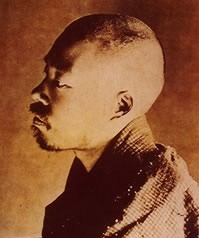
Buddha-death
Buddha-death:
the moonflower’s face,
the snake gourd’s fart
Masaoka Shiki
(1867-1902)
Buddha-death
•fleursdumal.nl magazine
More in: #Editors Choice Archiv, Archive S-T, Archive S-T, Shiki, Masaoka
Feeling All the Kills is a dazzling new collection that breaks the poet’s silence on what it means to experience and live in the wake of a violent assault and rape.
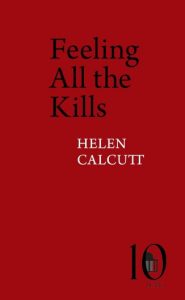 Calcutt weaves stunning musicality with raw, unhindered storytelling, as the poems both collectively, and in their individual power, explore the distinctly connected, yet fractured selves of ‘sexual being’, ‘mother’ and ‘abused person’.
Through the poems’ breathtaking and vital vocabulary Calcutt brings the physical, emotional, and sexual nuances of life to the foreground, with strength, subtlety and beauty, and courageously harnesses a sense of ownership over such a lasting trauma.
At the heart of this collection is a personal desire to navigate a way back to a sensual, whole-feeling self, to shamelessly ‘feel all’ — with authenticity and power.
Helen Calcutt is a leading artist and choreographer working with a specialism in text embodiment within theatre & movement. She is the author of three volumes of poetry and Artistic Director of dance-theatre company ‘Beyond Words‘.
Her writing has been published globally. ‘Somehow’ (Verve Poetry Press, 2020), was a PBS Winter Bulletin Pamphlet & Poetry School Book of the Year (2020). Anthology ‘Eighty-Four’ (Verve Press, 2019), created in aid of the suicide prevention charity C.A.L.M. was a Saboteur Award shortlist & a Poetry Wales Book of the Year, 2019. Her full-length collection ‘Feeling All the Kills’ was published by Pavilion Poetry, April 2024.
Feeling All the Kills
by Helen Calcutt (Author)
Pavilion Poetry
Publisher: Liverpool University Press
28 April 2024
Language : English
Paperback : 84 pages
ISBN-10 : 1802074724
ISBN-13 : 978-1802074727
£10.11
•fleursdumal.nl magazine
More in: #Modern Poetry Archive, - Book News, - Bookstores, Archive C-D, Archive C-D
Der Sänger
Was hör ich draußen vor dem Tor,
Was auf der Brücke schallen?
Laß den Gesang vor unserm Ohr
Im Saale widerhallen!
Der König sprachs, der Page lief;
Der Knabe kam, der König rief:
Laßt mir herein den Alten!
Gegrüßet seid mir, edle Herrn,
Gegrüßt ihr, schöne Damen!
Welch reicher Himmel, Stern bei Stern!
Wer kennet ihre Namen?
Im Saal voll Pracht und Herrlichkeit
Schließt, Augen, euch; hier ist nicht Zeit,
Sich staunend zu ergetzen.
Der Sänger drückt’ die Augen ein
Und schlug in vollen Tönen;
Die Ritter schauten mutig drein,
Und in den Schoß die Schönen.
Der König, dem das Lied gefiel,
Ließ, ihn zu ehren für sein Spiel,
Eine goldne Kette holen.
Die goldne Kette gib mir nicht,
Die Kette gib den Rittern,
Vor deren kühnem Angesicht
Der Feinde Lanzen splittern;
Gib sie dem Kanzler, den du hast,
Und laß ihn noch die goldne Last
Zu andern Lasten tragen.
Ich singe, wie der Vogel singt,
Der in den Zweigen wohnet;
Das Lied, das aus der Kehle dringt,
Ist Lohn, der reichlich lohnet.
Doch darf ich bitten, bitt ich eins:
Laß mir den besten Becher Weins
In purem Golde reichen.
Er setzt’ ihn an, er trank ihn aus:
O Trank voll süßer Labe!
O wohl dem hochbeglückten Haus,
Wo das ist kleine Gabe!
Ergehts euch wohl, so denkt an mich,
Und danket Gott so warm, als ich
Für diesen Trunk euch danke.
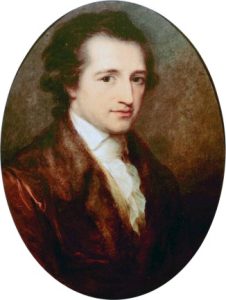
Johann Wolfgang von Goethe
(1749-1832)
Der Sänger
•fleursdumal.nl magazine
More in: # Music Archive, Archive G-H, Archive G-H, Goethe, Johann Wolfgang von, J.W. von Goethe
Aspiration
Poor, impious Soul! that fixes its high hopes
In the dim distance, on a throne of clouds,
And from the morning’s mist would make the ropes
To draw it up amid acclaim of crowds—
Beware! That soaring path is lined with shrouds;
And he who braves it, though of sturdy breath,
May meet, half way, the avalanche and death!
O poor young Soul!—whose year-devouring glance
Fixes in ecstasy upon a star,
Whose feverish brilliance looks a part of earth,
Yet quivers where the feet of angels are,
And seems the future crown in realms afar—
Beware! A spark thou art, and dost but see
Thine own reflection in Eternity!
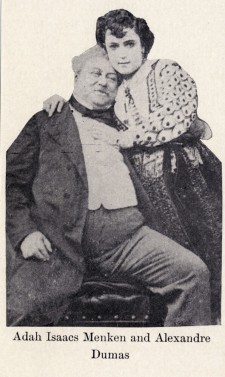
Adah Isaacs Menken
(1835 – 1868)
Aspiration
•fleursdumal.nl magazine
More in: - Archive Tombeau de la jeunesse, Archive M-N, Archive M-N, Menken, Adah, THEATRE
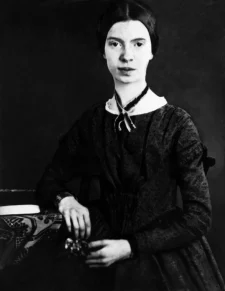
Wild nights
– Wild nights!
Wild nights – Wild nights!
Were I with thee
Wild nights should be
Our luxury!
Futile – the winds –
To a Heart in port –
Done with the Compass –
Done with the Chart!
Rowing in Eden –
Ah – the Sea!
Might I but moor – tonight –
In thee!
Emily Dickinson
(1830—1886)
Wild nights – Wild nights!
• fleursdumal.nl magazine
More in: Archive C-D, Archive C-D, Dickinson, Emily
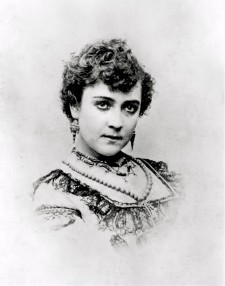
A Memory
I see her yet, that dark-eyed one,
Whose bounding heart God folded up
In His, as shuts when day is done,
Upon the elf the blossom’s cup.
On many an hour like this we met,
And as my lips did fondly greet her,
I blessed her as love’s amulet:
Earth hath no treasure, dearer, sweeter.
The stars that look upon the hill,
And beckon from their homes at night,
Are soft and beautiful, yet still
Not equal to her eyes of light.
They have the liquid glow of earth,
The sweetness of a summer even,
As if some Angel at their birth
Had dipped them in the hues of Heaven.
They may not seem to others sweet,
Nor radiant with the beams above,
When first their soft, sad glances meet
The eyes of those not born for love;
Yet when on me their tender beams
Are turned, beneath love’s wide control,
Each soft, sad orb of beauty seems
To look through mine into my soul.
I see her now that dark-eyed one,
Whose bounding heart God folded up
In His, as shuts when day is done,
Upon the elf the blossom’s cup.
Too late we met, the burning brain,
The aching heart alone can tell,
How filled our souls of death and pain
When came the last, sad word, Farewell!
Adah Isaacs Menken
(1835 – 1868)
A Memory
•fleursdumal.nl magazine
More in: - Archive Tombeau de la jeunesse, Archive M-N, Archive M-N, Menken, Adah, THEATRE
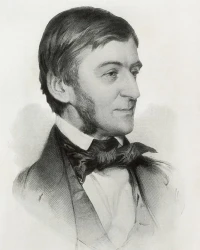
Water
The water understands
Civilization well;
It wets my foot, but prettily,
It chills my life, but wittily,
It is not disconcerted,
It is not broken-hearted:
Well used, it decketh joy,
Adorneth, doubleth joy:
Ill used, it will destroy,
In perfect time and measure
With a face of golden pleasure
Elegantly destroy.
Ralph Waldo Emerson
(1803 – 1882)
Water
•fleursdumal.nl magazine
More in: *Archive African American Literature, Archive E-F, Archive E-F, Emerson, Ralph Waldo

This little bag
This little bag I hope will prove
To be not vainly made–
For, if you should a needle want
It will afford you aid.
And as we are about to part
T’will serve another end,
For when you look upon the Bag
You’ll recollect your friend
Jane Austen
(1775 – 1817)
This little bag
Poem
•fleursdumal.nl magazine
More in: Archive A-B, Archive A-B, Austen, Jane, Austen, Jane, Jane Austen
Rachel Long’s much-anticipated debut collection of poems, My Darling from the Lions, explores shame, love and healing through her intimate poetic voice.
Shortlisted for the Rathbones Folio Prize / the Costa Poetry Award / the Forward Prize for Best First Collection / the Jhalak Prize
British poet Rachel Long’s poems are so razor-sharp and witty that they stand out from the first line. Long is also founder of the Octavia Collective for Womxn of Colour (a ‘community-minded’ collective where women of color can safely (learn to) write poetry, a response to the lack of inclusivity within literature and the academy).
She debuted two years ago with the impressive collection My darling from the lions. This collection was nominated for five different poetry awards and was named one of the 100 must-read books of 2021 by TIME.
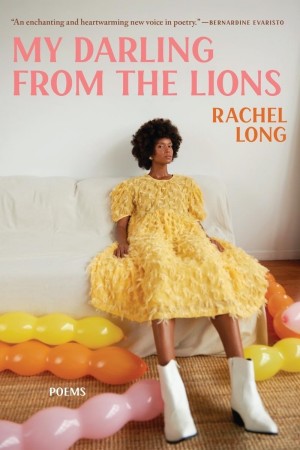 There is a vibrancy to her narrative poems that is extraordinary to find in a text; with dizzying precision, Long describes humorous, sensual and surreal scenes.
Sometimes, as a reader, you recognize yourself in the candid, uncomfortable moments Long shares; sometimes, on the contrary, the scenes are alienating. However, Long has a talent for making that alienation come across naturally nonetheless.
The collection can be described as a coming-of-age story, in which the speaker survives a tumultuous childhood and adolescence only to find himself in the confusing maze called adulthood.
Rachel Long creates relatable, human work that is sure to leave an impression that is sure to leave an impression long after she has once again traded the Rotterdam stage of Poetry International for her native London.
Long reveals herself as a razor-sharp and original voice on the issues of sexual politics and cultural inheritance that polarize our current moment. But it’s her refreshing commitment to the power of the individual poem that will leave the reader turning each page in eager anticipation: here is an immediate, wide-awake poetry that entertains royally, without sacrificing a note of its urgency or remarkable skill.
OPEN
This morning she told me
I sleep with my mouth open
and my hands in my hair.
I say, What, Mum, like screaming?
She says, No, baby, like abandon.
Rachel Long is a poet and the founder of Octavia Poetry Collective for Women of Colour, which is housed at Southbank Centre in London. My Darling from the Lions, first published by Picador in 2020, is her debut collection. She was born in London, and resides there today.
My Darling from the Lions:
Poems
by Rachel Long (Author)
Publisher: Tin House Books
Publication date: September 21, 2021
Language: English
Print length: 88 pages
ISBN-10: 1951142713
ISBN-13: 978-1951142711
Paperback
$14.98
•fleursdumal.nl magazine
More in: #Editors Choice Archiv, #Modern Poetry Archive, Archive K-L, Archive K-L
Haiku
After killing
a spider, how lonely I feel
in the cold of night!
Masaoka Shiki
(1867-1902)
Haiku
•fleursdumal.nl magazine
More in: #Editors Choice Archiv, Archive S-T, Archive S-T, Shiki, Masaoka
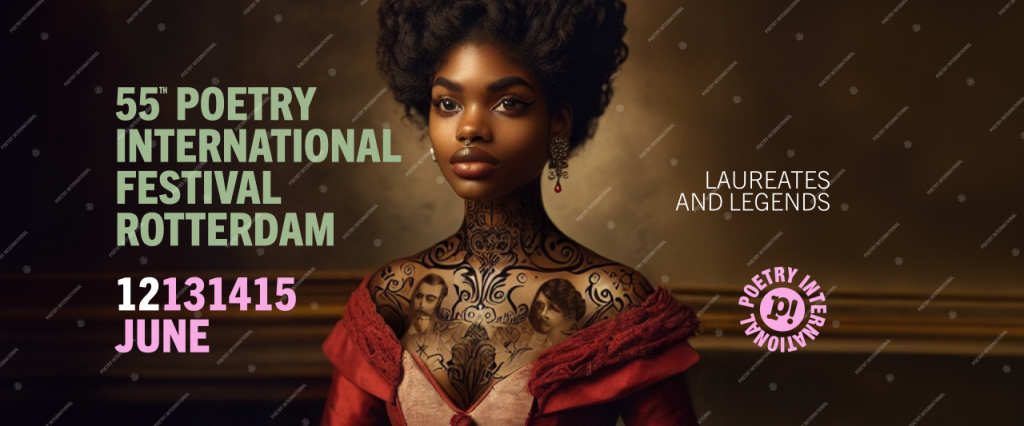
From 12 to 15 June 2025, be inspired by Poet Laureates from all over the world! Poetry International presents the very first Poetry Summit, curated in collaboration with Poet of the Netherlands Babs Gons.
This anniversary edition of the festival brings together a line-up of only the most acclaimed voices, awarded with the highest (inter)national distinctions.
As representatives of their country, they will take part in lectures, discussions, workshops, interviews, debates and performances. So be there during this special anniversary edition, where the most influential voices will unite for once to celebrate the 55th anniversary of Poetry International Festival.
During the festival, the Declaration of future poetry generations will also be written and presented: a document on the importance of poetry, intended to secure its future for next generations.
Poets: Warsan Shire (United Kingdom) / Jean D’Amérique (Haiti) / Diana Anphimiadi (Georgia) / Simon Armitage (United Kingdom) / Kwame Dawes (Jamaica) / Maricela Guerrero (Mexico) / Alysia Nicole Harris (USA) / Patricia Jabbeh Wesley (Liberia) / Tom Lanoye (Belgium) / Luljeta Lleshanaku (Albania) / Momtaza Mehri (United Kingdom) / Nadia Mifsud (Malta) / Ramsey Nasr (Netherlands) / Derek Otte (Netherlands) / Ilja Leonard Pfeijffer (Netherlands) / Esther Phillips (Barbados) / Astrid Roemer (Netherlands) / Ian Sanborn (USA) / Chris Tse (New Zealand) / Lyuba Yakimchuk (Ukraine)
More information on:
♦ Website 55th Poetry International Festival Rotterdam
•fleursdumal.nl magazine
More in: #Editors Choice Archiv, - Book News, - Bookstores, Armitage, Simon, City Poets / Stadsdichters, Literary Events, Poetry International, Ramsey Nasr, Tom Lanoye, Yakimchuk, Lyuba

Soldatenmädchen
Und wenn du Männer zwingen willst,
So mußt du rasch dich rüsten
Und, eh’ im West der Schnee noch schmilzt,
Marschier’n nach Frankreichs Küsten.
Und wenn du Mädchen zwingen willst,
So weck’ nur dein Gelüsten,
Und ruh’ heut’ nacht, daß du es stillst,
An meinen weißen Brüsten.
Und was der Leute Mund drob’ red’t,
Den Spott will ich ertragen;
Wenn dir der Feind nicht widersteht,
Wie sollt’s dein Lieb wohl wagen ?
Ein heißes Herz ist noch kein Fehl,
Ein’ tapfre Seel’ kein Schaden,
Und wenn sich fanden Herz und Seel’,
Wird uns der Himmel gnaden.
Denn so ist dein und mein Geschick:
Dir schuf der Schmied die Waffen;
Den ros’gen Mund, den dunklen Blick,
Die hat mir Gott geschaffen.
Der Schuster hat die Schuh’ gemacht,
Die deinen Weg betraten,
Vom Schneider hab’ ich meine Tracht,
Mein Kindlein vom Soldaten.
Gertrud Kolmar
(1894 – 1943)
Soldatenmädchen
•fleursdumal.nl magazine
More in: *War Poetry Archive, Archive K-L, Archive K-L, Kolmar, Gertrud
Thank you for reading Fleurs du Mal - magazine for art & literature