Fleurs du Mal Magazine


Or see the index
New Cemetery is the highly imaginative and wide-ranging new collection from the Poet Laureate.
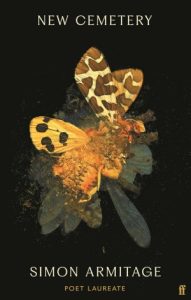 The conversion of a local beauty spot into a municipal graveyard is the starting point for New Cemetery.
From regular walks around the boundary near his moorland home in West Yorkshire, Simon Armitage chronicles the extraordinary transformation of landscape both outer and inner.
These luminous and wry poems – composed in short-lined tercets – reflect the changing world: one of unstable weather patterns and unpredictable news events, all observed across a few acres of Pennine upland.
As phases of lockdown come and go and the cemetery fills up with his new ‘neighbours’, Armitage charts personal losses of his own, often retreating to his garden shed to navigate blank paper with pen and ink – and the results are as surprising as they are life-enhancing.
Simon Armitage was born in West Yorkshire and is Professor of Poetry at the University of Leeds. His collections of poetry, which have received numerous prizes and awards, include Seeing Stars (2010), The Unaccompanied (2017), Sandettie Light Vessel Automatic (2019), Magnetic Field (2020) and his acclaimed translation of Sir Gawain and the Green Knight (2007). He writes extensively for television and radio, and is the author of two novels and the non-fiction bestsellers All Points North (1998), Walking Home (2012) and Walking Away (2015). His theatre works include The Last Days of Troy, performed at Shakespeare’s Globe in 2014. From 2015 to 2019, he served as Professor of Poetry at the University of Oxford, and, in 2018, he was awarded the Queen’s Gold Medal for Poetry. Simon Armitage is Poet Laureate.
Title: New Cemetery
Author: Simon Armitage
Publisher: Faber & Faber
Publication date: 25 Sept. 2025
Edition: Main
Language: English
Print length: 120 pages
ISBN-10: 0571357334
ISBN-13: 978-0571357338
Hardback
£14.99
‘There is no other poet writing in modern Britain who has his feeling for its words and things: the cashpoints, the power tools, the “mail-order driftwood”; the clichés, the jokes, the unspoken emotions . . . the most popular English poet since Larkin.’
Sunday Times
‘Armitage is that rare beast: a poet whose work is ambitious, accomplished and complex as well as popular.’
Sunday Telegraph
•fleursdumal.nl magazine
More in: #Modern Poetry Archive, - Book News, - Bookstores, Archive A-B, Archive A-B, Armitage, Simon, Galerie des Morts

Vrijheid is een open boek
In Nederland lijkt het vanzelfsprekend dat je alles kunt lezen. Maar die vrijheid is niet overal zo normaal. De Week van het Verboden Boek is geïnspireerd op de Amerikaanse Banned Books Week en wordt dit jaar voor het eerst in Nederland georganiseerd. Bibliotheken in het hele land doen mee, met lezingen, gesprekken, boekentafels en andere activiteiten.
• fleursdumal.nl magazine
More in: - Book Lovers, - Book News, Banned Books, Literary Events, PEN Actions, REPRESSION OF WRITERS, JOURNALISTS & ARTISTS
Dying
I.
Leave me; oh! leave me,
Lest I find this low earth sweeter than the skies.
Leave me lest I deem Faith’s white bosom bared to the betraying arms of Death.
Hush your fond voice, lest it shut out the angel trumpet-call!
See my o’erwearied feet bleed for rest.
Loose the clinging and the clasping of my clammy fingers.
Your soft hand of Love may press back the dark, awful shadows of Death, but the soul faints in the strife and struggles of nights that have no days.
I am so weary with this climbing up the smooth steep sides of the grave wall.
My dimmed eyes can no longer strain up through the darkness to the temples and palaces that you have built for me upon Life’s summit.
God is folding up the white tent of my youth.
My name is enrolled for the pallid army of the dead.
II
It is too late, too late!
You may not kiss back my breath to the sunshine.
How can these trembling hands of dust reach up to bend the untempered iron of Destiny down to my woman-forehead?
Where is the wedge to split its knotty way between the Past and the Future?
The soaring bird that would sing its life out to the stars, may not leave its own atmosphere;
For, in the long dead reaches of blank space in the Beyond, its free wings fall back to earth baffled.
Once gathering all my sorrows up to one purpose—rebel-like—I dared step out into Light, when, lo! Death tied my unwilling feet, and with hands of ice, bandaged my burning lips, and set up, between my eyes and the Future, the great Infinite of Eternity, full in the blazing sun of my Hope!
From the red round life of Love I have gone down to the naked house of Fear.
Drowned in a storm of tears.
My wild wings of thought drenched from beauty to the color of the ground.
Going out at the hueless gates of day.
Dying, dying.
III.
Oh! is there no strength in sorrow, or in prayers?
Is there no power in the untried wings of the soul, to smite the brazen portals of the sun?
Must the black-sandaled foot of Night tramp out the one star that throbs through the darkness of my waning life?
May not the strong arm of “I will,” bring some beam to lead me into my sweet Hope again?
Alas, too late! too late!
The power of these blood-dripping cerements sweeps back the audacious thought to emptiness.
Hungry Death will not heed the poor bird that has tangled its bright wing through my deep-heart pulses.
Moaning and living.
Dying and loving.
IV.
See the poor wounded snake; how burdened to the ground;
How it lengthens limberly along the dust.
Now palpitates into bright rings only to unwind, and reach its bleeding head up the steep high walls around us.
Now, alas! falling heavily back into itself, quivering with unuttered pain;
Choking with its own blood it dies in the dust.
So we are crippled ever;
Reaching and falling,
Silent and dying.
V.
Gold and gleaming jewel shatter off their glory well in the robes of royalty, but when we strain against the whelming waves, the water gurgling down our drowning throats, we shred them off, and hug the wet, cold rocks lovingly.
Then old death goes moaning back from the steady footing of Life baffled.
Ah! is it too late for me to be wise.
Will my feeble hands fail me in the moveless steppings back to the world?
Oh! if youth were only back!
Oh! if the years would only empty back their ruined days into the lap of the Present!
Oh! if yesterday would only unravel the light it wove into the purple of the Past!
Ah! then might I be vigilant!
Then might the battle be mine!
Nor should my sluggish blood drip down the rocks till the noon-tide sun should draw it up mistily in smoke.
Then should the heaviness of soul have dropped as trees do their weight of rainy leaves.
Nor should the sweet leash of Love have slipped from my hungry life, and left me pining, dying for his strength.
I should have wrapt up my breathing in the naked bosom of Nature, and she would have kissed me back to sweetest comfort, and I would have drawn up from her heart draughts of crusted nectar and promises of eternal joys.
Oh! it is not the glittering garniture of God’s things that come quivering into the senses, that makes our lives look white through the windings of the wilderness.
It is the soul’s outflow of purple light that clashes up a music with the golden blood of strong hearts.
Souls with God’s breath upon them,
Hearts with Love’s light upon them.
VI.
If my weak puny hand could reach up and rend the sun
from his throne to-day, then were the same but a little thing for me to do.
It is the Far Off, the great Unattainable, that feeds the passion we feel for a star.
Looking up so high, worshipping so silently, we tramp out the hearts of flowers that lift their bright heads for us and die alone.
If only the black, steep grave gaped between us, I feel that I could over-sweep all its gulfs.
I believe that Love may unfold its white wings even in the red bosom of Hell.
I know that its truth can measure the distance to Heaven with one thought.
Then be content to let me go, for these pale hands shall reach up from the grave, and still draw the living waters of Love’s well.
That is better, surer than climbing with bruised feet and bleeding hands to plead with the world for what is mine own.
Then straighten out the crumpled length of my hair, and loose all the flowers one by one.
God is not unjust.
VII.
Oh! in the great strength of thy unhooded soul, pray for my weakness.
Let me go! See the pale and solemn army of the night is on the march.
Do not let my shivering soul go wailing up for a human love to the throne of the Eternal.
Have we not watched the large setting sun drive a
column of light through the horizon down into the darkness?
So within the grave’s night, O my beloved! shall my love burn on to eternity.
O Death! Death! loose out thy cold, stiff fingers from my quivering heart!
Let the warm blood rush back to gasp up but one more word!
O Love! thou art stronger, mightier than all!
O Death! thou hast but wedded me to Life!
Life is Love, and Love is Eternity.
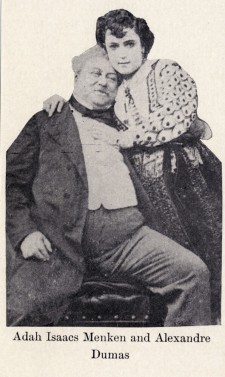
Adah Isaacs Menken
(1835 – 1868)
Dying
•fleursdumal.nl magazine
More in: - Archive Tombeau de la jeunesse, Archive M-N, Archive M-N, Menken, Adah, THEATRE
Homerusfeest, 1967
Aan wapenrusting had ik, eersteklasser, niets.
Jongensgedachten liet ik vrijuit glanzen nog
als onbeschermde flanken. Ook deze avond
op dit plein, de eerste echte buitenshuis.
Homerusfeest: bij avondval rezen omwolkt
uit kelders geesten op en ook door de gangen
boven zag je ze traag bij kaarslicht dwalen.
Ouderejaars met lakens om, dat wist ik wel,
maar toch…. Ik voelde me te groot al om te
reiken naar de rectorhand die zo nabij naar
nicotine rook, te klein ook nog om daar al veel
te ver van af te durven wijken. Verwondering
tekende in mijn hoofd steeds groter cirkels.
Ik leek me op die cour als onder een stolp
te bewegen. Daarbuiten het uitspansel,
vast als een gegoten spiegel.
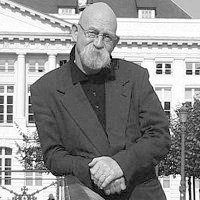
Bert Bevers
Homerusfeest, 1967
Bert Bevers is dichter en schrijver
Hij woont en werkt in Antwerpen (Be)
•fleursdumal.nl magazine
More in: Archive A-B, Archive A-B, Bevers, Bert
Almost!
Within my reach!
I could have touched!
I might have chanced that way!
Soft sauntered through the village,
Sauntered as soft away!
So unsuspected violets
Within the fields lie low,
Too late for striving fingers
That passed, an hour ago.
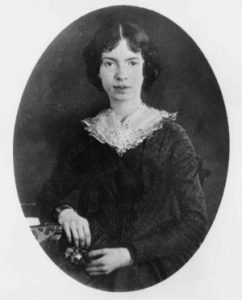
Emily Dickinson
(1830—1886)
Almost!
• fleursdumal.nl magazine
More in: Archive C-D, Archive C-D, Dickinson, Emily
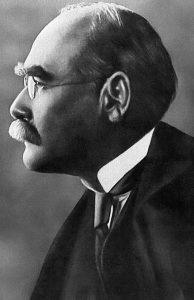
The Press
The Soldier may forget his Sword,
The Sailorman the Sea,
The Mason may forget the Word
And the Priest his Litany:
The Maid may forget both jewel and gem,
And the Bride her wedding-dress–
But the Jew shall forget Jerusalem
Ere we forget the Press!
Who once hath stood through the loaded hour
Ere, roaring like the gale,
The Harrild and the Hoe devour
Their league-long paper-bale,
And has lit his pipe in the morning calm
That follows the midnight stress–
He hath sold his heart to the old Black Art
We call the daily Press.
Who once hath dealt in the widest game
That all of a man can play,
No later love, no larger fame
Will lure him long away.
As the war-horse snuffeth the battle afar,
The entered Soul, no less,
He saith: “Ha! Ha!” where the trumpets are
And the thunders of the Press!
Canst thou number the days that we fulfill,
Or the Times that we bring forth?
Canst thou send the lightnings to do thy will,
And cause them reign on earth?
Hast thou given a peacock goodly wings,
To please his foolishness?
Sit down at the heart of men and things,
Companion of the Press!
The Pope may launch his Interdict,
The Union its decree,
But the bubble is blown and the bubble is pricked
By Us and such as We.
Remember the battle and stand aside
While Thrones and Powers confess
That King over all the children of pride
Is the Press–the Press–the Press!
Rudyard Kipling
(1865 – 1936)
The Press
•fleursdumal.nl magazine
More in: Archive K-L, Archive K-L, Kipling, Rudyard, PRESS & PUBLISHING

Verdwenen details
Alle ochtenden dat je niet wist waar te beginnen
aan wat totaal weg is, vergeten. Kwam de bakker
dagelijks aan de deur? Hoe heette dat meisje aan
de overkant ook weer, en dat verhaal waarvan je
toen zo droomde? Wie wist wat hij hoorde te doen
die eerste keer? Waar bleef de volgende scène?
Bert Bevers
Verdwenen details
(Ongepubliceerd)
Bert Bevers is dichter en schrijver
Hij woont en werkt in Antwerpen (Be)
•fleursdumal.nl magazine
More in: Archive A-B, Archive A-B, Bevers, Bert
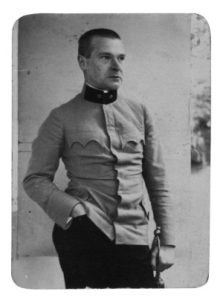
Nähe des Todes
O der Abend, der in die finsteren Dörfer der Kindheit geht.
Der Weiher unter den Weiden
Füllt sich mit den verpesteten Seufzern der Schwermut.
O der Wald, der leise die braunen Augen senkt,
Da aus des Einsamen knöchernen Händen
Der Purpur seiner verzückten Tage hinsinkt.
O die Nähe des Todes. Laß uns beten.
In dieser Nacht lösen auf lauen Kissen
Vergilbt von Weihrauch sich der Liebenden schmächtige Glieder.
Georg Trakl
(1887 – 1914)
Nähe des Todes
• fleursdumal.nl magazine
More in: - Archive Tombeau de la jeunesse, Archive S-T, Archive S-T, Expressionism, Trakl, Georg, Trakl, Georg
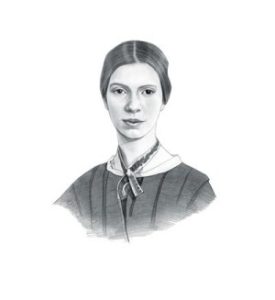
Rouge et Noir
Soul, wilt thou toss again?
By just such a hazard
Hundreds have lost, indeed,
But tens have won an all.
Angels’ breathless ballot
Lingers to record thee;
Imps in eager caucus
Raffle for my soul.
Emily Dickinson
(1830—1886)
Rouge et Noir
• fleursdumal.nl magazine
More in: Archive C-D, Archive C-D, Dickinson, Emily
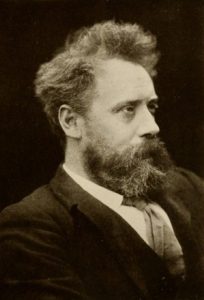
Invictus
Out of the night that covers me,
Black as the pit from pole to pole,
I thank whatever gods may be
For my unconquerable soul.
In the fell clutch of circumstance
I have not winced nor cried aloud.
Under the bludgeonings of chance
My head is bloody, but unbowed.
Beyond this place of wrath and tears
Looms but the Horror of the shade,
And yet the menace of the years
Finds and shall find me unafraid.
It matters not how strait the gate,
How charged with punishments the scroll,
I am the master of my fate,
I am the captain of my soul.
William Ernest Henley
(1849—1903)
Invictus
• fleursdumal.nl magazine
More in: Archive G-H, Archive G-H, Henley, William Ernest
This is the first publication in English of the anthology that contains Breton’s definitive statement on l’humour noir, one of the seminal concepts of Surrealism, and his provocative assessments of the writers he most admired.
While some of the authors featured in The Anthology of Black Humor are already well known to American readers–Swift, Kafka, Rimbaud, Poe, Lewis Carroll, and Baudelaire among them (and even then, Breton’s selections are often surprising)–many others are sure to come as a revelation.
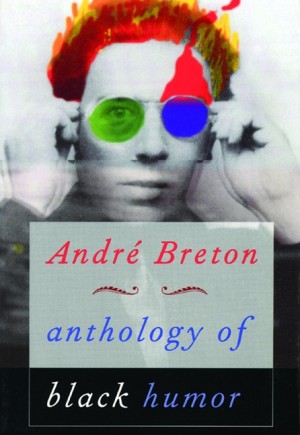 The entries range from the acerbic aphorisms of Swift, Lichtenberg, and Duchamp to the theatrical slapstick of Christian Dietrich Grabbe, from the wry missives of Rimbaud and Jacques Vache to the manic paranoia of Dali, from the ferocious iconoclasm of Alfred Jarry and Arthur Craven to the offhand hilarity of Apollinaire at his most spontaneous.
For each of the forty-five authors included, Breton has provided an enlightening biographical and critical preface, situating both the writer and the work in the context of black humor–a partly macabre, partly ironic, and often absurd turn of spirit that Breton defined as “a superior revolt of the mind.”
“Anthologies can aim to be groundbreaking or thought-provoking; few can be said to have introduced a new phrase–or a new concept–into the language. No one had ever used the term “black humour” before this one came along, unless, perhaps, it was from a racial angle.”–The Guardian
Andre Breton (1896-1966), the founder and principal theorist of the Surrealist movement, is one of the major literary figures of the past century. His best-known works in English translation include Nadja, Mad Love, The Manifestoes of Surrealism, The Magnetic Fields (with Philippe Soupault), and Earthlight. Mark Polizzotti is the author of Revolution of the Mind: The Life of Andre Breton.
Mark Polizzotti is an author, translator, and publisher living in New York. His books include Revolution of the Mind: The Life of André Breton, Highway 61 Revisited, Sympathy for the Traitor: A Translation Manifesto, and Why Surrealism Matters.
His essays and reviews have appeared in The New York Times, The New Republic, The Wall Street Journal, Apollo, ARTnews, The Nation, Parnassus, Bookforum, and elsewhere. His translations of works by Gustave Flaubert, Arthur Rimbaud, Scholastique Mukasonga, Patrick Modiano, Marguerite Duras, André Breton, Eric Vuillard, among others, have won the English PEN Award and been shortlisted for the National Book Award, the International Booker Prize, the NBCC/Gregg Barrios Prize, and the French-American Foundation Translation Prize.
He is a Chevalier of the Ordre des Arts et des Lettres and the recipient of an American Academy of Arts and Letters Award for Literature.
Anthology of Black Humor
by André Breton
Translator: Mark Polizzotti
Publisher: City Lights Publishers
Language: English
356 pages
ISBN-10: 0872863212
ISBN-13: 978-0872863217
Paperback 1997
Price: $26.95
E-book 2021 (978-0872868496)
Price: $18,99
•fleursdumal.nl magazine
More in: - Book Lovers, André Breton, Archive A-B, Archive A-B, DADA, Dada, Surrealism

Verlorenes Lied
Ich bin arm und habe nichts.
Nichts! Garnichts!
Nichts als lange Haare –
Bin zweiundzwanzig Jahre –
Sind rotes Gold, meine Haare,
Sagen die Kaufleut’ mir.
Ich bin arm und habe nichts.
Nichts! Garnichts!
Nichts als gemalte Brauen –
Fluch den ehrbaren Frauen! –
Sind tintenschwarz, meine Brauen,
Sagen die Schreiber mir.
Ich bin arm und habe nichts.
Nichts! Garnichts!
Nichts als kecke Blicke –
Weißt du, wem ich sie schicke ? –
Sind scharfes Schrot, meine Blicke,
Sagen die Jäger mir.
Ich bin arm und habe nichts.
Nichts! Garnichts!
Nichts als reife Lippen –
Tugend fährt über Klippen –
Sind kirschensüß, meine Lippen,
Sagen die Gärtner mir.
Ich bin arm und habe nichts.
Nichts! Garnichts!
Nichts als geschmeidige Sohlen –
Ei, in der Schenke das Johlen! –
Sind zum Tanzen gemacht, meine Sohlen,
Sagen die Spielleut’ mir.
Ich bin arm und habe nichts.
Nichts! Garnichts!
Nichts als weiße Glieder –
Blankes Gold lockert mein Mieder –
Sind Flammen der Lust, meine Glieder,
Sagst heute nacht du mir.
Ich bin arm und habe nichts.
Nichts! Garnichts!
Nichts als ein Leben in Schande,
Einen Tod am Straßenrande –
Einst in zerlumptem Gewande
Scharrt man mich ein im Sande.
Wo ? Sagt keiner mir.
Ich bin arm und habe nichts.
Nichts! Garnichts!
Nichts als die heimliche Zähre –
Daß ich so arm nicht wäre! –
Nur meine Dirnenehre!
Vom Strauch fällt die tausendste Beere;
Fault sie, wer sucht nach ihr ?
Sterb’ ich, wer weint nach mir?
Gertrud Kolmar
(1894 – 1943)
Verlorenes Lied
•fleursdumal.nl magazine
More in: *War Poetry Archive, Archive K-L, Archive K-L, Kolmar, Gertrud
Thank you for reading Fleurs du Mal - magazine for art & literature