Fleurs du Mal Magazine


Or see the index
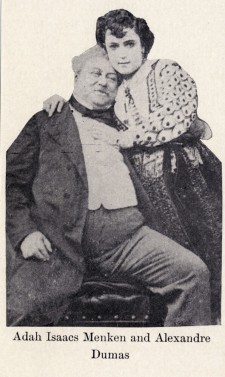
Dying
I.
Leave me; oh! leave me,
Lest I find this low earth sweeter than the skies.
Leave me lest I deem Faith’s white bosom bared to the betraying arms of Death.
Hush your fond voice, lest it shut out the angel trumpet-call!
See my o’erwearied feet bleed for rest.
Loose the clinging and the clasping of my clammy fingers.
Your soft hand of Love may press back the dark, awful shadows of Death, but the soul faints in the strife and struggles of nights that have no days.
I am so weary with this climbing up the smooth steep sides of the grave wall.
My dimmed eyes can no longer strain up through the darkness to the temples and palaces that you have built for me upon Life’s summit.
God is folding up the white tent of my youth.
My name is enrolled for the pallid army of the dead.
II
It is too late, too late!
You may not kiss back my breath to the sunshine.
How can these trembling hands of dust reach up to bend the untempered iron of Destiny down to my woman-forehead?
Where is the wedge to split its knotty way between the Past and the Future?
The soaring bird that would sing its life out to the stars, may not leave its own atmosphere;
For, in the long dead reaches of blank space in the Beyond, its free wings fall back to earth baffled.
Once gathering all my sorrows up to one purpose—rebel-like—I dared step out into Light, when, lo! Death tied my unwilling feet, and with hands of ice, bandaged my burning lips, and set up, between my eyes and the Future, the great Infinite of Eternity, full in the blazing sun of my Hope!
From the red round life of Love I have gone down to the naked house of Fear.
Drowned in a storm of tears.
My wild wings of thought drenched from beauty to the color of the ground.
Going out at the hueless gates of day.
Dying, dying.
III.
Oh! is there no strength in sorrow, or in prayers?
Is there no power in the untried wings of the soul, to smite the brazen portals of the sun?
Must the black-sandaled foot of Night tramp out the one star that throbs through the darkness of my waning life?
May not the strong arm of “I will,” bring some beam to lead me into my sweet Hope again?
Alas, too late! too late!
The power of these blood-dripping cerements sweeps back the audacious thought to emptiness.
Hungry Death will not heed the poor bird that has tangled its bright wing through my deep-heart pulses.
Moaning and living.
Dying and loving.
IV.
See the poor wounded snake; how burdened to the ground;
How it lengthens limberly along the dust.
Now palpitates into bright rings only to unwind, and reach its bleeding head up the steep high walls around us.
Now, alas! falling heavily back into itself, quivering with unuttered pain;
Choking with its own blood it dies in the dust.
So we are crippled ever;
Reaching and falling,
Silent and dying.
V.
Gold and gleaming jewel shatter off their glory well in the robes of royalty, but when we strain against the whelming waves, the water gurgling down our drowning throats, we shred them off, and hug the wet, cold rocks lovingly.
Then old death goes moaning back from the steady footing of Life baffled.
Ah! is it too late for me to be wise.
Will my feeble hands fail me in the moveless steppings back to the world?
Oh! if youth were only back!
Oh! if the years would only empty back their ruined days into the lap of the Present!
Oh! if yesterday would only unravel the light it wove into the purple of the Past!
Ah! then might I be vigilant!
Then might the battle be mine!
Nor should my sluggish blood drip down the rocks till the noon-tide sun should draw it up mistily in smoke.
Then should the heaviness of soul have dropped as trees do their weight of rainy leaves.
Nor should the sweet leash of Love have slipped from my hungry life, and left me pining, dying for his strength.
I should have wrapt up my breathing in the naked bosom of Nature, and she would have kissed me back to sweetest comfort, and I would have drawn up from her heart draughts of crusted nectar and promises of eternal joys.
Oh! it is not the glittering garniture of God’s things that come quivering into the senses, that makes our lives look white through the windings of the wilderness.
It is the soul’s outflow of purple light that clashes up a music with the golden blood of strong hearts.
Souls with God’s breath upon them,
Hearts with Love’s light upon them.
VI.
If my weak puny hand could reach up and rend the sun
from his throne to-day, then were the same but a little thing for me to do.
It is the Far Off, the great Unattainable, that feeds the passion we feel for a star.
Looking up so high, worshipping so silently, we tramp out the hearts of flowers that lift their bright heads for us and die alone.
If only the black, steep grave gaped between us, I feel that I could over-sweep all its gulfs.
I believe that Love may unfold its white wings even in the red bosom of Hell.
I know that its truth can measure the distance to Heaven with one thought.
Then be content to let me go, for these pale hands shall reach up from the grave, and still draw the living waters of Love’s well.
That is better, surer than climbing with bruised feet and bleeding hands to plead with the world for what is mine own.
Then straighten out the crumpled length of my hair, and loose all the flowers one by one.
God is not unjust.
VII.
Oh! in the great strength of thy unhooded soul, pray for my weakness.
Let me go! See the pale and solemn army of the night is on the march.
Do not let my shivering soul go wailing up for a human love to the throne of the Eternal.
Have we not watched the large setting sun drive a
column of light through the horizon down into the darkness?
So within the grave’s night, O my beloved! shall my love burn on to eternity.
O Death! Death! loose out thy cold, stiff fingers from my quivering heart!
Let the warm blood rush back to gasp up but one more word!
O Love! thou art stronger, mightier than all!
O Death! thou hast but wedded me to Life!
Life is Love, and Love is Eternity.
Adah Isaacs Menken
(1835 – 1868)
Dying
•fleursdumal.nl magazine
More in: - Archive Tombeau de la jeunesse, Archive M-N, Archive M-N, Menken, Adah, THEATRE
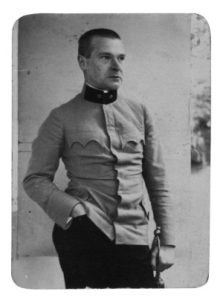
Nähe des Todes
O der Abend, der in die finsteren Dörfer der Kindheit geht.
Der Weiher unter den Weiden
Füllt sich mit den verpesteten Seufzern der Schwermut.
O der Wald, der leise die braunen Augen senkt,
Da aus des Einsamen knöchernen Händen
Der Purpur seiner verzückten Tage hinsinkt.
O die Nähe des Todes. Laß uns beten.
In dieser Nacht lösen auf lauen Kissen
Vergilbt von Weihrauch sich der Liebenden schmächtige Glieder.
Georg Trakl
(1887 – 1914)
Nähe des Todes
• fleursdumal.nl magazine
More in: - Archive Tombeau de la jeunesse, Archive S-T, Archive S-T, Expressionism, Trakl, Georg, Trakl, Georg
In Venedig
Stille in nächtigem Zimmer.
Silbern flackert der Leuchter
Vor dem singenden Odem
Des Einsamen;
Zaubrisches Rosengewölk.
Schwärzlicher Fliegenschwarm
Verdunkelt den steinernen Raum
Und es starrt von der Qual
Des goldenen Tags das Haupt
Des Heimatlosen.
Reglos nachtet das Meer.
Stern und schwärzliche Fahrt
Entschwand am Kanal.
Kind, dein kränkliches Lächeln
Folgte mir leise im Schlaf.
Georg Trakl
(1887 – 1914)
In Venedig
• fleursdumal.nl magazine
More in: *War Poetry Archive, - Archive Tombeau de la jeunesse, Archive S-T, Archive S-T, Expressionism, Expressionisme, Trakl, Georg, Trakl, Georg
Aspiration
Poor, impious Soul! that fixes its high hopes
In the dim distance, on a throne of clouds,
And from the morning’s mist would make the ropes
To draw it up amid acclaim of crowds—
Beware! That soaring path is lined with shrouds;
And he who braves it, though of sturdy breath,
May meet, half way, the avalanche and death!
O poor young Soul!—whose year-devouring glance
Fixes in ecstasy upon a star,
Whose feverish brilliance looks a part of earth,
Yet quivers where the feet of angels are,
And seems the future crown in realms afar—
Beware! A spark thou art, and dost but see
Thine own reflection in Eternity!
Adah Isaacs Menken
(1835 – 1868)
Aspiration
•fleursdumal.nl magazine
More in: - Archive Tombeau de la jeunesse, Archive M-N, Archive M-N, Menken, Adah, THEATRE
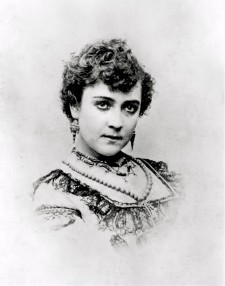
A Memory
I see her yet, that dark-eyed one,
Whose bounding heart God folded up
In His, as shuts when day is done,
Upon the elf the blossom’s cup.
On many an hour like this we met,
And as my lips did fondly greet her,
I blessed her as love’s amulet:
Earth hath no treasure, dearer, sweeter.
The stars that look upon the hill,
And beckon from their homes at night,
Are soft and beautiful, yet still
Not equal to her eyes of light.
They have the liquid glow of earth,
The sweetness of a summer even,
As if some Angel at their birth
Had dipped them in the hues of Heaven.
They may not seem to others sweet,
Nor radiant with the beams above,
When first their soft, sad glances meet
The eyes of those not born for love;
Yet when on me their tender beams
Are turned, beneath love’s wide control,
Each soft, sad orb of beauty seems
To look through mine into my soul.
I see her now that dark-eyed one,
Whose bounding heart God folded up
In His, as shuts when day is done,
Upon the elf the blossom’s cup.
Too late we met, the burning brain,
The aching heart alone can tell,
How filled our souls of death and pain
When came the last, sad word, Farewell!
Adah Isaacs Menken
(1835 – 1868)
A Memory
•fleursdumal.nl magazine
More in: - Archive Tombeau de la jeunesse, Archive M-N, Archive M-N, Menken, Adah, THEATRE
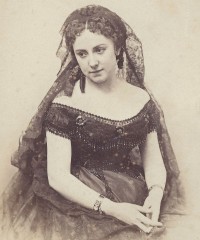
Karazah To Karl
Come back to me! my life is young,
My soul is scarcely on her way,
And all the starry songs she’s sung,
Are prelude to a grander lay.
Come back to me!
Let this song-born soul receive thee,
Glowing its fondest truth to prove;
Why so early did’st thou leave me,
Are our heaven-grand life of love?
Come back to me!
My burning lips shall set their seal
On our betrothal bond to-night,
While whispering murmurs will reveal
How souls can love in God’s own light.
Come back to me!
Come back to me! The stars will be
Silent witnesses of our bliss,
And all the past shall seem to thee
But a sweet dream to herald this!
Come back to me!
Adah Isaacs Menken
(1835 – 1868)
Karazah To Karl
•fleursdumal.nl magazine
More in: - Archive Tombeau de la jeunesse, Archive M-N, Archive M-N, Menken, Adah, THEATRE
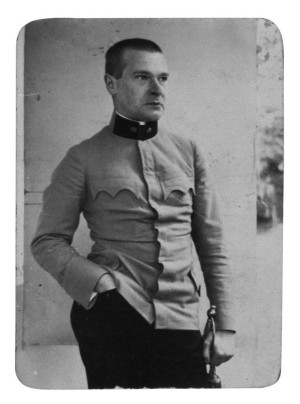
Sonja
Abend kehrt in alten Garten;
Sonjas Leben, blaue Stille.
Wilder Vögel Wanderfahrten;
Kahler Baum in Herbst und Stille.
Sonnenblume, sanftgeneigte
Über Sonjas weißes Leben.
Wunde, rote, niegezeigte
Läßt in dunklen Zimmern leben,
Wo die blauen Glocken läuten;
Sonjas Schritt und sanfte Stille.
Sterbend Tier grüßt im Entgleiten,
Kahler Baum in Herbst und Stille.
Sonne alter Tage leuchtet
Über Sonjas weiße Brauen,
Schnee, der ihre Wangen feuchtet,
Und die Wildnis ihrer Brauen.
Georg Trakl
(1887 – 1914)
Sonja
• fleursdumal.nl magazine
More in: #Experimental Poetry Archive, - Archive Tombeau de la jeunesse, Archive S-T, Archive S-T, Expressionism, Trakl, Georg, Trakl, Georg
Answer Me
I
In from the night.
The storm is lifting his black arms up to the sky.
Friend of my heart, who so gently marks out the lifetrack for me, draw near to-night;
Forget the wailing of the low-voiced wind:
Shut out the moanings of the freezing, and the starving, and the dying, and bend your head low to me:
Clasp my cold, cold hands in yours;
Think of me tenderly and lovingly:
Look down into my eyes the while I question you, and if you love me, answer me—
Oh, answer me!
II
Is there not a gleam of Peace on all this tiresome earth?
Does not one oasis cheer all this desert-world?
When will all this toil and pain bring me the blessing?
Must I ever plead for help to do the work before me set?
Must I ever stumble and faint by the dark wayside?
Oh the dark, lonely wayside, with its dim-sheeted ghosts peering up through their shallow graves!
Must I ever tremble and pale at the great Beyond?
Must I find Rest only in your bosom, as now I do?
Answer me—
Oh, answer me!
III
Speak to me tenderly.
Think of me lovingly.
Let your soft hands smooth back my hair.
Take my cold, tear-stained face up to yours.
Let my lonely life creep into your warm bosom, knowing no other rest but this.
Let me question you, while sweet Faith and Trust are folding their white robes around me.
Thus am I purified, even to your love, that came like John the Baptist in the Wilderness of Sin.
You read the starry heavens, and lead me forth.
But tell me if, in this world’s Judea, there comes never quiet when once the heart awakes?
Why must it ever hush Love back?
Must it only labor, strive, and ache?
Has it no reward but this?
Has it no inheritance but to bear—and break?
Answer me—
Oh, answer me!
IV
The Storm struggles with the Darkness.
Folded away in your arms, how little do I heed their battle!
The trees clash in vain their naked swords against the door.
I go not forth while the low murmur of your voice is drifting all else back to silence.
The darkness presses his black forehead close to the window pane, and beckons me without.
Love holds a lamp in this little room that hath power to blot back Fear.
But will the lamp ever starve for oil?
Will its blood-red flame ever grow faint and blue?
Will it uprear itself to a slender line of light?
Will it grow pallid and motionless?
Will it sink rayless to everlasting death?
Answer me—
Oh, answer me!
V
Look at these tear-drops.
See how they quiver and die on your open hands.
Fold these white garments close to my breast, while I question you.
Would you have me think that from the warm shelter of your heart I must go to the grave?
And when I am lying in my silent shroud, will you love me?
When I am buried down in the cold, wet earth, will you grieve that you did not save me?
Will your tears reach my pale face through all the withered leaves that will heap themselves upon my grave?
Will you repent that you loosened your arms to let me fall so deep, and so far out of sight?
Will you come and tell me so, when the coffin has shut out the storm?
Answer me—
Oh, answer me!
Adah Isaacs Menken
(1835 – 1868)
Answer Me
•fleursdumal.nl magazine
More in: - Archive Tombeau de la jeunesse, Archive M-N, Archive M-N, Menken, Adah, THEATRE
Dreams of Beauty
Visions of Beauty, of Light, and of Love,
Born in the soul of a Dream,
Lost, like the phantom-bird under the dove,
When she flies over a stream—
Come ye through portals where angel wings droop,
Moved by the heaven of sleep?
Or, are ye mockeries, crazing a soul,
Doomed with its waking to weep?
I could believe ye were shadows of earth,
Echoes of hopes that are vain,
But for the music ye bring to my heart,
Waking its sunshine again.
And ye are fleeting. All vainly I strive
Beauties like thine to portray;
Forth from my pencil the bright picture starts,
And—ye have faded away.
Like to a bird that soars up from the spray,
When we would fetter its wing;
Like to the song that spurns Memory’s grasp
When the voice yearneth to sing;
Like the cloud-glory that sunset lights up,
When the storm bursts from its height;
Like the sheet-silver that rolls on the sea,
When it is touched by the night—
Bright, evanescent, ye come and are gone,
Visions of mystical birth;
Art that could paint you was never vouchsafed
Unto the children of earth.
Yet in my soul there’s a longing to tell
All you have seemed unto me,
That unto others a glimpse of the skies
You in their sorrow might be.
Vain is the wish. Better hope to describe
All that the spirit desires,
When through a cloud of vague fancies and schemes
Flash the Promethean fires.
Let me then think of ye, Visions of Light,
Not as the tissue of dreams.
But as realities destined to be
Bright in Futurity’s beams.
Ideas formed by a standard of earth
Sink at Reality’s shrine
Into the human and weak like ourselves,
Losing the essence divine;
But the fair pictures that fall from above
On the heart’s mirror sublime
Carry a signature written in tints,
Bright with the future of time,
And the heart, catching them, yieldeth a spark
Under each stroke of the rod—
Sparks that fly upward and light the New Life,
Burning an incense to God!
Adah Isaacs Menken
(1835 – 1868)
Dreams of Beauty
•fleursdumal.nl magazine
More in: - Archive Tombeau de la jeunesse, Archive M-N, Archive M-N, Menken, Adah, THEATRE

Vorfrühling
In dieser Märznacht trat ich spät aus meinem Haus.
Die Straßen waren aufgewühlt von Lenzgeruch und grünem Saatregen.
Winde schlugen an. Durch die verstörte Häusersenkung ging ich weit hinaus
Bis zu dem unbedeckten Wall und spürte: meinem Herzen schwoll ein neuer Takt entgegen.
In jedem Lufthauch war ein junges Werden ausgespannt.
Ich lauschte, wie die starken Wirbel mir im Blute rollten.
Schon dehnte sich bereitet Acker. In den Horizonten eingebrannt
War schon die Bläue hoher Morgenstunden, die ins Weite führen sollten.
Die Schleusen knirschten. Abenteuer brach aus allen Fernen.
Ueberm Kanal, den junge Ausfahrtwinde wellten, wuchsen helle Bahnen,
In deren Licht ich trieb. Schicksal stand wartend in umwehten Sternen.
In meinem Herzen lag ein Stürmen wie von aufgerollten Fahnen.
Ernst Stadler
(1883 – 1914)
Vorfrühling
•fleursdumal.nl magazine
More in: *War Poetry Archive, - Archive Tombeau de la jeunesse, Archive S-T, Archive S-T, Stadler, Ernst
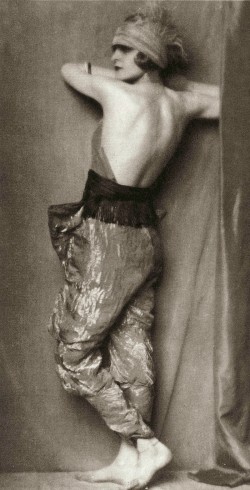
Kokain
Wände
Tisch
Schatten und Katzen
Grüne Augen
Viele Augen
Millionenfache Augen
Das Weib
Nervöses zerflatterndes Begehren
Aufflackerndes Leben
Schwälende Lampe
Tanzender Schatten
Kleiner Schatten
Großer Schatten
Der Schatten
Oh – der Sprung über den Schatten
Er quält dieser Schatten
Er martert dieser Schatten
Er frißt mich dieser Schatten
Was will dieser Schatten
Kokain
Aufschrei
Tiere
Blut
Alkohol
Schmerzen
Viele Schmerzen
Und die Augen
Die Tiere
Die Mäuse
Das Licht
Dieser Schatten
Dieser schrecklich große schwarze Schatten.
Anita Berber
(1899-1928)
Kokain
Anita Berber (1899 – 1928) was a German dancer, actress, and poet. She lived during the time of the Weimar Republic in Berlin.
• fleursdumal.nl magazine
More in: #Editors Choice Archiv, Anita Berber, Anita Berber, Archive A-B, Archive A-B, Berber, Anita, DANCE & PERFORMANCE, FDM in Berlin, Opium-Eaters
Bannières de mai
Aux branches claires des tilleuls
Meurt un maladif hallali.
Mais des chansons spirituelles
Voltigent parmi les groseilles.
Que notre sang rie en nos veines,
Voici s’enchevêtrer les vignes.
Le ciel est joli comme un ange.
L’azur et l’onde communient.
Je sors. Si un rayon me blesse
Je succomberai sur la mousse.
Qu’on patiente et qu’on s’ennuie
C’est trop simple. Fi de mes peines.
je veux que l’été dramatique
Me lie à son char de fortunes
Que par toi beaucoup, ô Nature,
– Ah moins seul et moins nul ! – je meure.
Au lieu que les Bergers, c’est drôle,
Meurent à peu près par le monde.
Je veux bien que les saisons m’usent.
A toi, Nature, je me rends ;
Et ma faim et toute ma soif.
Et, s’il te plaît, nourris, abreuve.
Rien de rien ne m’illusionne ;
C’est rire aux parents, qu’au soleil,
Mais moi je ne veux rire à rien ;
Et libre soit cette infortune.
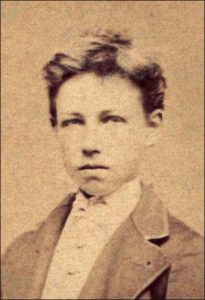
Arthur Rimbaud
(1854 – 1891)
Bannières de mai
Derniers vers
• fleursdumal.nl magazine
More in: #Editors Choice Archiv, Archive Q-R, Archive Q-R, Arthur Rimbaud, Rimbaud, Arthur, Rimbaud, Arthur
Thank you for reading Fleurs du Mal - magazine for art & literature